Bookmark this: Learning how to annotate a book takes one pencil and a five-symbol key: underline what matters, circle words to look up, write ? for confusion, ! for surprise and a star for lines you’ll want again. Mark lightly, tab at the end of each sitting, and never write in a library book. Use a loose slip there instead.
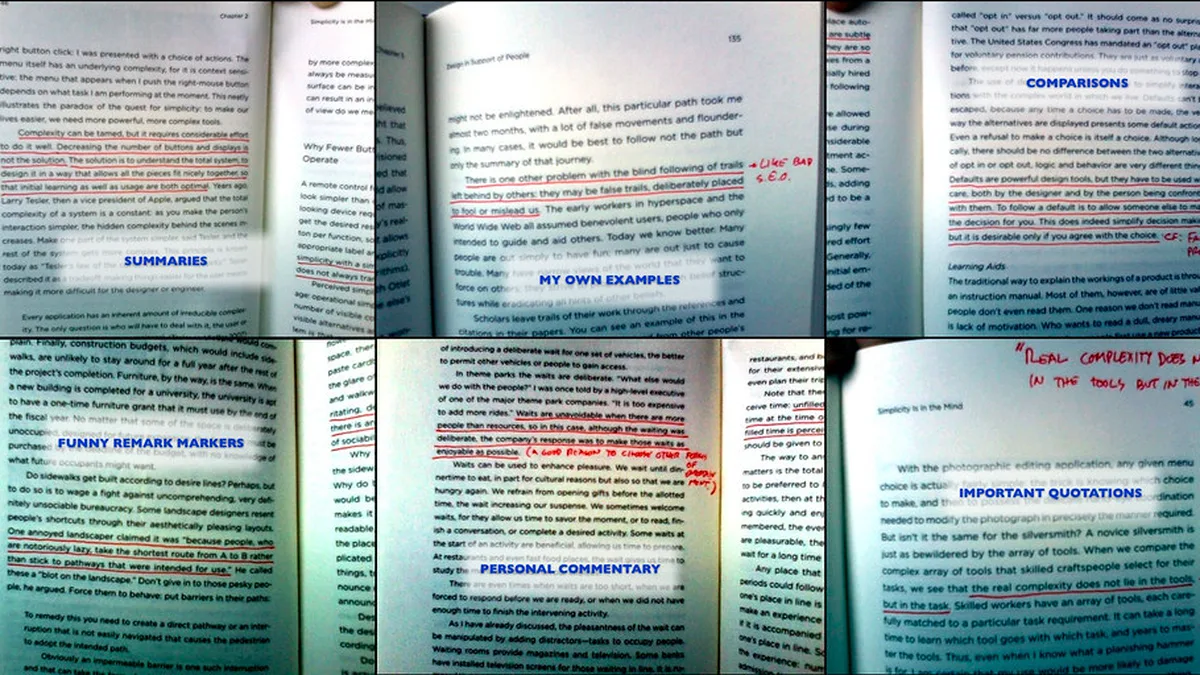
Maybe you’ve seen those photos of books bristling with rainbow tabs and thought, that’s lovely, and also not for me. Good news: annotating books doesn’t need a kit, a color system or neat handwriting. It needs a reason to pause, a mark you’ll recognize later and the permission to keep it small.
This guide is for first-timers and for anyone who tried once, filled three pages with highlighter and quietly gave up. You’ll get a starter key you can copy onto a bookmark, a sitting-by-sitting plan for your first annotated book, a quick way to pick a method, what libraries actually allow, and how to keep notes on ebooks. If you like keeping notes about what you read, the Reading Journals & Notes section picks up where this leaves off.
- Before page one: copy the five-symbol key onto the inside back cover or a bookmark. Two minutes, no more.
- Chapter one: underline only. You’re learning what catches your eye, not building a system yet.
- From chapter two: add the symbols. A question mark, an exclamation point or a star in the margin is faster than a sentence.
- End of every sitting: spend the last few minutes flagging the two or three pages you’d actually reopen.
- Halfway through: flip back. If any page has more ink than white space, ease off for the second half.
- Last page: write three lines on the back page: what stayed with you, one open question and a page to reread.
What does it mean to annotate a book?
To annotate a book is to leave small marks and notes while you read so you can find, question or remember a passage later. It can be a single underline, a symbol in the margin, a flag on the page edge or a line in a notebook. Anything that turns reading into a two-way conversation counts.
Students learn annotation as a study skill, and the UNC Learning Center’s guide to annotating texts frames it that way: mark mindfully, put ideas in your own words and ask how you’d explain a passage to a friend. Reading for pleasure borrows the same habit with lower stakes: you’re leaving breadcrumbs for the you who rereads this book in five years, or who wants one good question for a buddy read.
Annotation also isn’t summary. Mark reactions, not content: the line that made you laugh, the word you had to look up.
What do you need to start annotating books?
You need a pencil, a book you own and something to mark pages with, like a strip of scrap paper. That’s enough for your first book. Highlighters, colored tabs and fine-tip pens are nice later, once you know which marks you actually make, so buy nothing until you’ve finished one annotated book.
Supply lists get long fast, and that’s often where the habit stalls. A tidy starter set:
- A soft pencil: forgiving, erasable and quiet on thin paper. Pen is fine too if you know you’ll keep the book.
- Paper slips or an index card: they work as bookmarks, page markers and a place for longer thoughts.
- One highlighter, optional: pick a pale color and save it for lines you’d quote to someone.
- A notebook, optional: some readers keep a separate notebook for big ideas so the margins stay light.
That last idea comes from readers who annotate a lot. Christi Hegstad, who writes the Reading and Purpose newsletter, describes keeping a “study book” for longer notes and says she stopped color-coding because running out of one color threw her whole system off. Simple tools survive a busy month. Elaborate ones don’t.
What should a book annotation key include?
A book annotation key should include four to six marks, each with one clear meaning, that you can make in plain pencil without stopping to think. Start with underline, circle, question mark, exclamation point and star. Add colors only after the symbols feel automatic, and write the key somewhere you’ll see it every time you open the book.
The question mark and exclamation point aren’t arbitrary. The UNC Learning Center suggests a ? for questions you want to explore, a ! for interesting connections and a * for examples you might use later. This starter key keeps those three and adds two marks that suit fiction and memoir as well as nonfiction.
| Mark | Meaning | Optional color later | Example of when to use it |
|---|---|---|---|
| Underline | This line matters to me | Yellow | A sentence that sums up the chapter |
| Circle | Look this up | None, keep it pencil | A word, place or name you don’t know |
| ? | I’m confused or I disagree | Blue | A plot jump or an argument that doesn’t land |
| ! | Surprise or connection | Pink | A twist, or an echo of another book |
| Star | I want to find this again | Green | A quote for your journal or your book club |
Two small rules make any key work. First, one meaning per mark, never two. Second, keep a running index on the last blank page: page number, mark, three words. That index is what turns annotating books into something you’ll actually use, because you can find every star in ten seconds instead of flipping through 300 pages.
How to annotate a book, one pass at a time
The easiest way to learn how to annotate a book is to separate reading from tidying. Read with only a pencil in hand and make quick marks as you go. Then, at the end of each sitting, spend a few minutes going back to add flags, a note or an index line. You stay in the story and still keep the good bits.
Hegstad describes almost exactly this rhythm in her newsletter: she highlights while reading, adds page flags at the end of a chapter or a session, and only fills her study book once she’s finished the whole book. It’s a useful pattern even if your version is much lighter. Here’s how one sitting can run:
- Read first, mark second. When something catches you, make the smallest possible mark and keep going. A star takes one second; a sentence in the margin can cost you the scene.
- Write words only when a symbol isn’t enough. Three or four words beat a paragraph. “Same as ch. 2?” is a perfect margin note.
- Close with a two-minute sweep. Flip back through the pages you just read and flag the two or three you’d truly reopen.
- Add one index line. Page number, mark and a short label on the back page. That’s the whole habit.
If you’re coming back to books after a long break, keep annotation even lighter for the first few weeks. Getting the reading habit back comes first, and our guide on how to get back into reading covers that part. Marks can wait until the pages feel easy again.
And on rereads, you’ll often spot things the first pass missed. In a 2024 r/books thread on how people annotate, several readers said they save heavier notes for second readings, when they already know where the story goes and can mark the foreshadowing.
Which annotation method fits the way you read?
Pick the method by asking two questions: do you own the book, and do you want the marks to be permanent? Pencil suits owned books you might reread. Highlighter and pen suit books you’ve decided to keep for good. Loose slips and a notebook suit borrowed books, and ebook highlights suit anything you read on a screen.
| Method | Best for | Erasable? | OK in library books? |
|---|---|---|---|
| Pencil marks and margin notes | Owned paperbacks, first tries | Yes | No |
| Highlighter or pen | Owned books you’ll keep | No | No |
| Sticky tabs or flags | Owned books you want to keep clean | Removable, may leave residue | No, per the policies below |
| Loose paper slips | Borrowed and library books | Nothing touches the page | Yes |
| Notebook or index card | Long thoughts, any book | Nothing touches the page | Yes |
| Ebook highlights and notes | Ebooks and library ebooks | Yes, delete anytime | Yes, within the app |
You can mix methods too. Plenty of readers underline in pencil and keep a notebook for the longer thoughts, so the margins stay readable. One reader in that r/books thread described matching a single color across highlighter, flags and notes for each theme, and saving the full system for big classics. That’s a sensible way to treat color: as a reward for the books that earn it, not a requirement for every paperback.
A note on tabs in your own books: the preservation team at Notre Dame’s Hesburgh Libraries advises against dog-earing, highlighting, writing in or putting sticky notes in any book you want to preserve, because sticky notes can leave a residue. For a beloved hardcover, a paper slip is the gentler choice.
Can you annotate library books?
No, you shouldn’t mark a library book in any way, and that includes pencil and sticky notes, not only pen. Libraries treat marks as damage because the next reader inherits them. You can still annotate a library book, though: keep your marks on loose paper slips and a notebook, and leave the pages exactly as you found them.
Some popular guides recommend sticky tabs for borrowed books, but real library pages say otherwise:
- NOVA Libraries at Northern Virginia Community College says on its library questions page that highlighting, writing (even in pencil) and sticky notes are not permitted in library materials.
- Vassar College Libraries lists in its preservation questions page: don’t write or underline, don’t use highlighter, and don’t use sticky notes or any other adhesive tabs.
- The AMNH Research Library asks readers in its book care guidelines never to put sticky notes on library materials, because they leave adhesive residue, and to use a plain slip of acid-free paper instead.
Your local public library may word it differently, so check its own policy page or ask at the desk. The safe default works everywhere: nothing touches the page. Slip a few strips of scrap paper in at the front, number them as you go, and write your symbol and a few words on the strip, not in the book. When you return it, the strips come home with you and go into your notebook.
Love a library book so much you keep wanting to mark it? Finish it with slips, then buy your own copy for the reread.
How do you annotate ebooks and library ebooks?
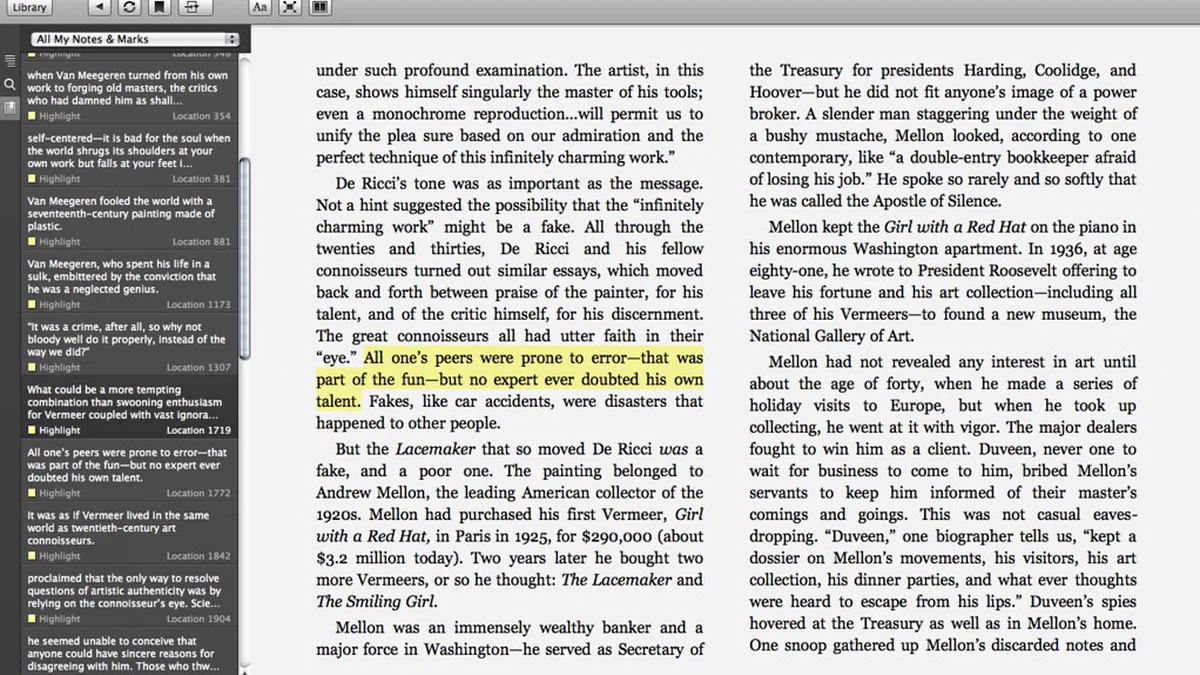
On ebooks, press and hold a word, drag to select the passage, then choose highlight or add a note. Most reading apps keep every highlight and note in one list, and some let you export it. That makes ebooks the easiest format to annotate and the easiest to search later, even for borrowed library ebooks.
Two common setups, based on the apps’ own help pages:
- Library ebooks in Libby: open the title’s Reading Journey (from your Shelf, choose Manage Loan, then Reading Journey), tap Actions, then Export Reading Data. The help page on exporting notes and highlights says you can export as a web page table or as a spreadsheet, and highlight exports include your notes.
- Kindle books in a web browser: Amazon’s help page on viewing your notebook in the web reader says the Notebook icon shows all your highlights, notes and bookmarks for a book in one list.
Your five-symbol key still works on a screen: type the symbol as the first character of each note. After you export, sorting by that first character gives you an instant index, with no eraser crumbs. Export library loans before they go back.
Annotation myths that stop people starting
Most people don’t skip annotating books because they tried it and hated it. They skip it because of a rule they assumed was real. These are the usual ones, with what actually helps.
| Myth | What actually helps |
|---|---|
| You need a full kit of colors and tabs before you start. | A pencil and a five-symbol key. Buy supplies after your first annotated book, once you know your marks. |
| Writing in a book ruins it. | Light pencil in a book you own is easy to live with and easy to erase. Keep loose slips for anything borrowed or precious. |
| Sticky tabs are fine in library books because they come off. | Library policies from NOVA, Vassar and AMNH say no adhesive notes at all. Use paper slips. |
| If you annotate, you have to annotate every book. | Annotate the books that make you want to talk back. Plenty of lifelong readers never mark a page. |
| Good annotation means lots of annotation. | Fewer marks are easier to find. If a page is mostly highlighter, nothing on it stands out. |
That fourth row matters most. In the same r/books thread, the most upvoted reply came from someone who’d read for decades without ever annotating and said it sounded too much like work. That’s a completely fair answer. Annotation is a tool for the books that call for it, and it’s never a test of how seriously you read.
Between chapters
Should you annotate in pen or pencil?
Start in pencil. It’s erasable, it doesn’t bleed through thin pages, and it takes the pressure off getting marks right. Switch to pen only for books you know you’ll keep and want the notes to last in.
How many annotations per page is too many?
If a page has more marks than white space, it’s too many to be useful. Aim for a handful of marks per chapter and save underlines for lines you’d actually reread or quote.
Do you have to annotate every book you read?
No. Annotate the books that make you want to talk back and read the rest freely. Many lifelong readers never annotate at all, and their reading counts just as much.
Can you annotate a book for a buddy read?
Yes, if the copy is yours. Write initials next to your notes and leave room for replies so the next reader can answer in the margin, then pass the book along.
What if you disagree with your old notes on a reread?
Keep them and add a dated note beside the old one. Seeing how your reading changed is one of the quiet pleasures of an annotated shelf, and it beats erasing your past self.
How we researched this: Book details (publication dates, series order, formats) are checked against the publisher and library catalogs. AI helped with an early draft; the writer rewrote it and checked every title. More about the site and the writer is on our about page.
Sources: UNC Learning Center, Annotating Texts; college library answers on marking books; Vassar College Libraries preservation answers; AMNH Research Library book care guidelines; Hesburgh Libraries preservation tips (2023); Libby Help, exporting notes and highlights; Amazon Help, web reader notebook; Christi Hegstad, Reading and Purpose (2025).
Leave a Reply
You must be logged in to post a comment.