Bookmark this: The best reading nook ideas start with what you already own: a chair that supports your back, a lamp aimed at the page, a surface within arm’s reach and a blanket. Test one spot for a week before you buy anything. Spend money only on whatever the trial proved was missing.
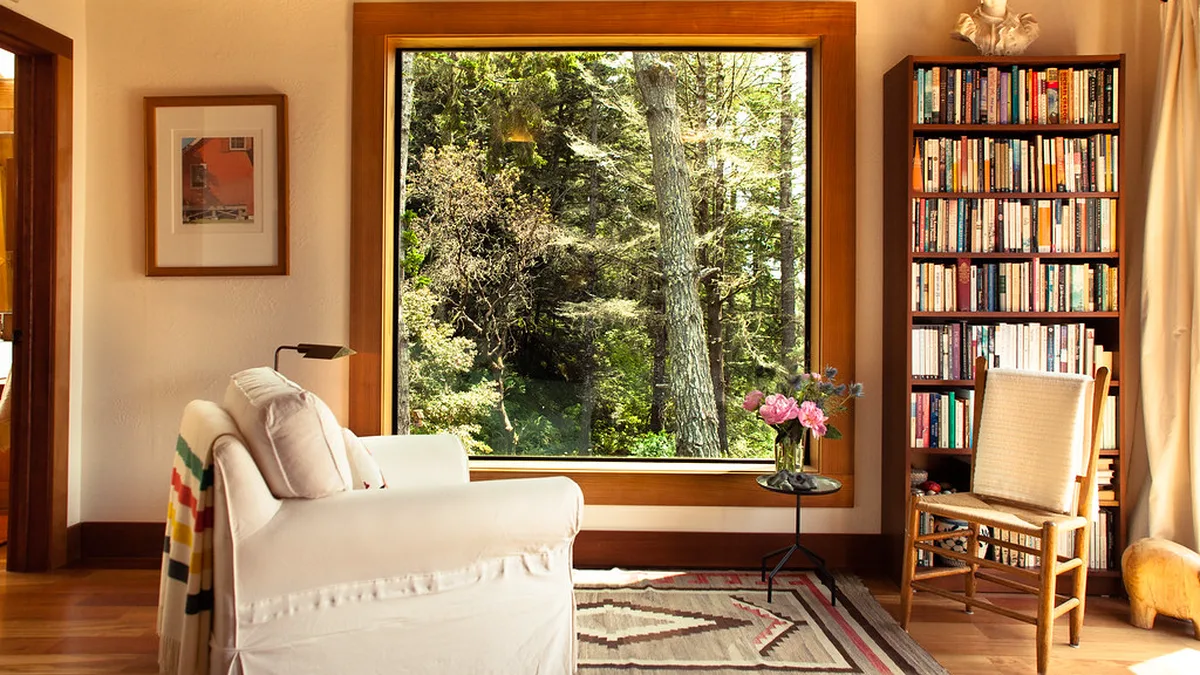
Most reading nook ideas you see online were designed by someone with a budget, a contractor and a photographer. Lovely to look at, less helpful if you rent, share the living room or own a curious dog. This guide is for people who want a corner that makes reading the easy choice after a long day.
You’ll get a one-week trial for finding the right spot, a 12-point checklist, a table that sorts every element into free, one small purchase or buy once, and sourced advice on light. No product picks, no prices.
If you’re rebuilding the habit itself, read how to get back into reading after a long break first. A nook helps most when the habit already has a time slot.
- Day 1, pick two spots. Sit with a book in any two places that could hold a chair: a window corner, a sofa end, a bedroom corner, a landing.
- Days 2 and 3, read 20 minutes in spot one. Use the chair and lamp you already have. Note what bugs you: a draft, glare, a TV in view, nowhere for a mug.
- Days 4 and 5, read 20 minutes in spot two. Same book, same time of day.
- Day 6, choose and fix the free problems. Move a lamp, borrow a cushion from the sofa, turn the chair.
- Day 7, write a one-line shopping list. Only the problem you couldn’t fix for free goes on it. Often that list is empty.
What makes reading nook ideas actually work?
Good reading nook ideas share one goal: they remove every small reason to get up. That means four things: a seat that holds your back for at least 30 minutes, light that lands on the page, a surface for a drink and a closed book, and nothing louder than the story nearby. Looks come last; comfort decides whether you go back tomorrow.
In a r/cottagecore thread about a reading nook built above a staircase, the most upvoted advice wasn’t about decor. Commenters said they couldn’t read long on a mattress, asked for back support and suggested a little table for a drink. One suggested a mug used only in the nook, a sweet way to make the habit feel like a ritual.
Ask a plainer question: what pulled you out of the last book you put down? Cold feet, a sore neck and a buzzing phone are all fixable.
That is why the reading nook ideas in this guide start with comfort and light, not color schemes. The small rule: if you can’t sit there for half an hour without shifting, change the seat before you change anything else.
The 12-point reading nook checklist
Run this list during your trial week; it turns loose reading nook ideas into a plan you can check off. Each point is something readers mention when a corner fails, and most cost nothing to fix. Tick what’s already true, then work down from the top, because the first items matter most.
- Back support. A chair with a firm back or a cushion behind your lower back. Beds and floor cushions tend to fail here.
- Light on the page. A lamp you can aim at the book, not a ceiling light behind your head.
- Arm’s-reach surface. A side table, stool, wide windowsill or even a sturdy box for a mug and a closed book.
- Power plan. An outlet close enough for a lamp without a cord across a walkway, or a rechargeable lamp.
- Warmth. A blanket within reach, away from drafty doors and vents.
- Feet up. An ottoman, a footstool or a stack of firm pillows.
- A landing spot for books. A basket, one shelf or a crate for the current read and the next one.
- Quiet eye line. Face away from the TV, the kitchen mess or the laundry pile.
- A phone parking place. A charger you have to stand up to reach.
- Glare check. No window or bulb shining straight into your eyes while you read.
- Two-minute reset. You can tidy the spot in two minutes, so it’s ready tomorrow.
- Your own touch. A print, a plant or a shelf of rereads.
Notice how far down the list the decor sits, even though decor is where most reading nook ideas online begin. If points one to five are covered, you already have a cozy reading nook, even if it would never make a magazine.
Where should you put a reading nook?
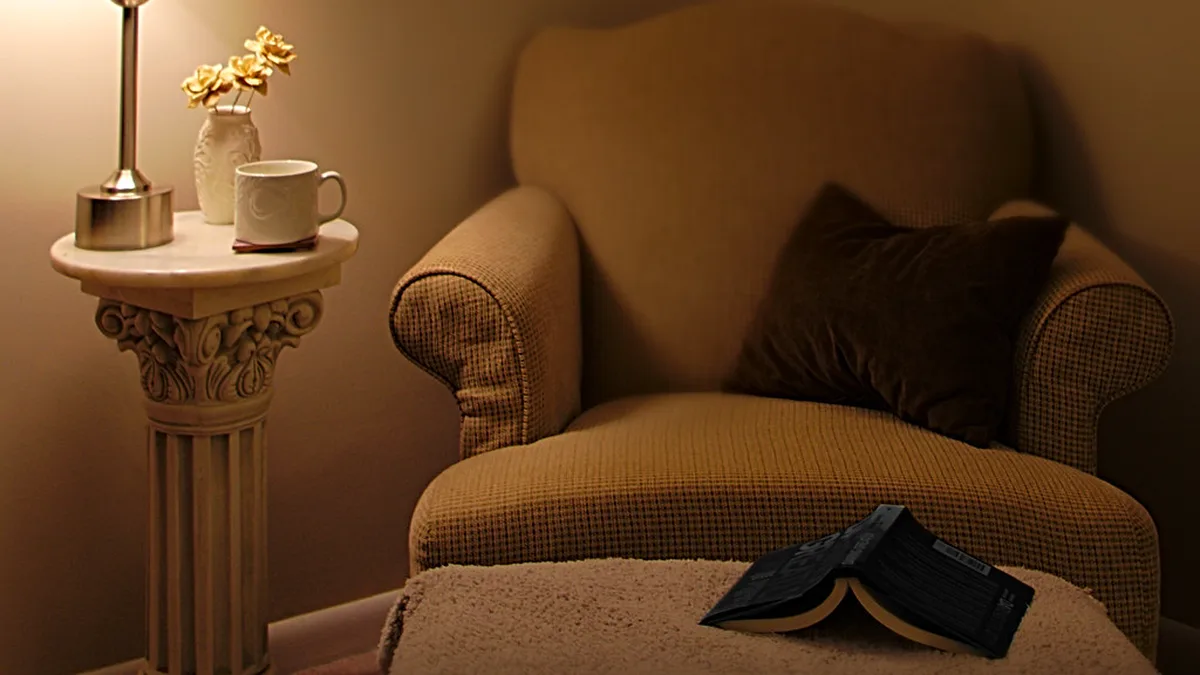
Put your reading nook wherever you already reach for a book and where you can sit with your back to the busiest part of the room. A window corner is the classic choice for daylight, but a bedroom corner, a landing or the end of a sofa can work just as well with a lamp. Test before you commit.
Each spot has a trade-off:
| Spot | Works well when | Watch out for |
|---|---|---|
| Window corner | You read mostly in daytime and want natural light | Glare on the page, cold glass in winter, a view that steals your attention |
| Bedroom corner | You read before sleep and want a calm, private spot | Drifting to the bed instead; keep the chair facing away from it |
| Living room sofa end | You share the space and can’t add furniture | TV noise and traffic; add a lamp and a basket to claim the corner |
| Landing or wide hallway | You have an awkward bit of floor nobody uses | No outlet, drafts, and people walking past |
| Under the stairs or a closet | You want an enclosed, den-like feel | Airflow, heat from a lamp in a tight space, low light |
The window detail matters more than people expect. In a r/HomeDecorating thread where a reader asked for help finishing a nook under a skylight, the top reply suggested turning the chair so the light fell on the page rather than the reader’s face, and another commenter simply said to face away from the window. A quarter turn costs nothing.
Which reading nook ideas cost nothing to try?
The reading nook ideas that cost nothing are the ones built from what’s already in your home: moving a lamp, borrowing a sofa cushion, turning a chair, clearing one shelf and folding a blanket over the arm. Do all of these first. Buy only what the trial week proved was missing, and buy once.
Sorting reading nook ideas by effort instead of price keeps the list useful wherever you live.
| Element | Free from home | One small purchase | Buy once, only if needed |
|---|---|---|---|
| Seat | Your best chair, moved to the spot | A firm cushion for your lower back | A reading chair, after a week of testing |
| Light | A lamp from another room, re-aimed | A brighter bulb, chosen by lumens | A floor or swing-arm lamp you can direct |
| Surface | A stool, crate or wide sill | A small side table | A table with a shelf for the next book |
| Warmth | A blanket from the linen cupboard | A draft stopper for a nearby door | A rug if the floor is cold |
| Books | One cleared shelf or a basket | A crate or bookend | A narrow bookcase |
| Feel | A plant, a print, a favorite mug | A flameless candle | Curtains to close the corner off |
Notice that a dedicated reading chair sits in the last column on purpose. It’s the priciest piece, and only a week of real reading tells you whether you need a high back, wide arms or a footrest.
How much light do you need to read comfortably?
You need enough light that the page is brighter than its surroundings and no glare bounces back at you. A practical starting point is a bulb of about 800 lumens, the output the FTC lists for a traditional 60-watt incandescent, aimed so it falls directly on the page. Brighten from there if your eyes tire.
Lumens, not watts, tell you how bright a bulb is. The FTC’s guide to shopping for light bulbs notes that a traditional 60-watt bulb gives about 800 lumens, while an LED with the same 800 lumens uses only about 9 watts. The Lighting Facts label on the box also shows where the bulb falls between warm, more yellow light and cool, more blue light.
Placement matters as much as brightness. The Canadian Association of Optometrists says, on its eye health page about reading, reading in the dark can’t cause permanent eye damage, but it can bring on headaches and eye strain. The same page quotes Graham Strong of the University of Waterloo School of Optometry saying most households are significantly under lit, and it advises aiming light directly onto the page rather than over your shoulder, to avoid glare.
- Aim, don’t flood. A lamp you can point at the book beats a bright ceiling light behind you.
- Match the screen. If you read on a tablet or e-reader, keep the room at least as bright as the screen, the optometrists’ page suggests, so your eyes aren’t constantly adjusting.
- Check from the chair. Look for glare or your own shadow on the page.
The small rule: test light at the hour you actually read. A corner that glows at noon can be a cave at 9 p.m.
How do you make a reading corner in a small space or a rental?
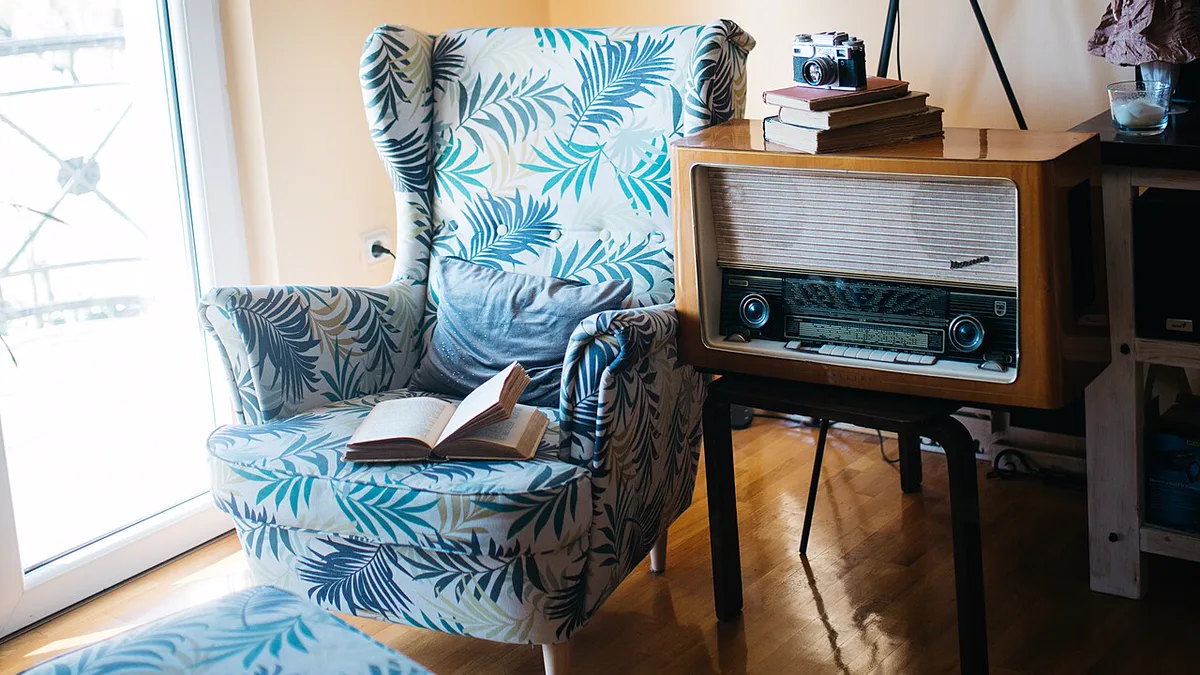
In a small space or a rental, make the reading corner portable and damage-free: a chair you already own, a rechargeable or plug-in lamp, a basket instead of shelves, and a blanket that lives on the chair. Nothing gets drilled, and everything moves with you. The corner is defined by habit, not by built-ins.
For renters, reading nook ideas usually stall on three blockers: an outlet, a landlord and a lack of floor. A reader in r/interiordesignideas who rents and asked what to do with a small nook beside a landing mentioned there was no socket, a new puppy and a ten-year-old who loves to read. The top reply suggested a rechargeable, cordless lamp rather than running new wiring.
- No outlet: pick a rechargeable lamp with a direction you can adjust, and charge it where your phone sleeps.
- No drilling: lean a narrow shelf against the wall, or use a basket or crate on the floor.
- Shared room: claim the corner with a lamp and one throw, and agree that the chair is a quiet zone after a set hour.
- Pets: keep tissues, snacks and cords off low tables. One owner shared in r/corgi that their dog learned to reach the tissues in a brand-new reading nook within days.
Small is often better, and the best reading nook ideas for a rental are the ones you can carry to the next place. A tight corner with good light feels like a den and stays tidy.
Is a cozy reading nook safe with candles, blankets and cords?
A cozy reading nook is safe when open flames stay well away from fabric and paper. The U.S. Fire Administration advises keeping candles at least 12 inches from anything that burns and not using lit candles in bedrooms or sleeping areas. In a nook full of books, cushions and blankets, a flameless candle gives the glow without the risk.
A reading corner packs together almost everything the U.S. Fire Administration’s candle safety guidance tells you to keep clear, and it’s the kind of spot where you might drift off mid-chapter. The same page suggests battery-operated flameless candles, which can look and feel like real ones.
Run lamp cords along the wall, not across the path to the chair, and give a warm lamp breathing room in closets and under-stair nooks.
The small rule: if you’d worry about leaving it on while you nap, swap it for something you wouldn’t.
Reading nook myths you can skip
Inspiration photos make reading nook ideas and reading corner ideas look like renovation projects. Most of what they imply isn’t true for an everyday reader, and believing it is the fastest way to never start.
| Myth | What actually helps |
|---|---|
| You need a window seat or a built-in | A chair, a lamp and a surface in any quiet corner |
| Soft overhead light is enough | A lamp aimed at the page, bright enough that you aren’t squinting |
| A bed or a floor cushion makes the coziest nook | Back support, which most readers say they miss on a mattress |
| Buy the reading chair first | Test with the chair you own for a week, then buy only what was missing |
| A nook needs a full bookshelf | One basket for the current read and the next one |
None of these myths are about reading. They’re about photographs. Your corner only has to work on a tired Tuesday night. More ideas for the space itself live in the reading nooks section.
So, which corner of your home is going to get the first twenty minutes this week?
Between chapters
How big does a reading nook need to be?
Only big enough for one chair, a small surface and a lamp. A corner about the size of an armchair plus a stool works.
Can your bed be your reading nook?
Yes, if you add firm support behind your back and a lamp you can aim at the page. Many readers find a bed fine for short sessions but tiring for long ones, so test it during a full chapter.
Do you need a bookshelf in a reading nook?
No. A basket or one cleared shelf for the current book and the next one is enough. A full bookshelf is a nice extra, not a requirement.
What’s the difference between a reading nook and a reading corner?
The words are used almost interchangeably. A nook usually suggests a partly enclosed space, like an alcove or window seat, while a reading corner can be any chair and lamp set in the corner of a room.
How do you set up a reading nook for kids?
Keep it low and safe: floor cushions with a wall or bean bag for back support, books at their eye level in a basket, a lamp out of reach with no trailing cords, and no candles.
No publisher paid for placement. The draft was machine-assisted; titles, dates and formats were re-checked by the writer against library catalogs.
Sources: FTC Consumer Advice, Shopping for light bulbs; Canadian Association of Optometrists, eye health page about reading; U.S. Fire Administration, candle safety guidance; Reddit threads in r/cottagecore, r/HomeDecorating, r/interiordesignideas and r/corgi, linked above. About the writer and this site: about Wonwood Original.
Leave a Reply
You must be logged in to post a comment.