Bookmark this: The best book club questions are open ones with more than one good answer: why a character chose something, what a scene was doing, whether the ending earned itself. Bring about ten, start with a quick round of first impressions, save “would you recommend it?” for last, and let follow-ups do most of the work.
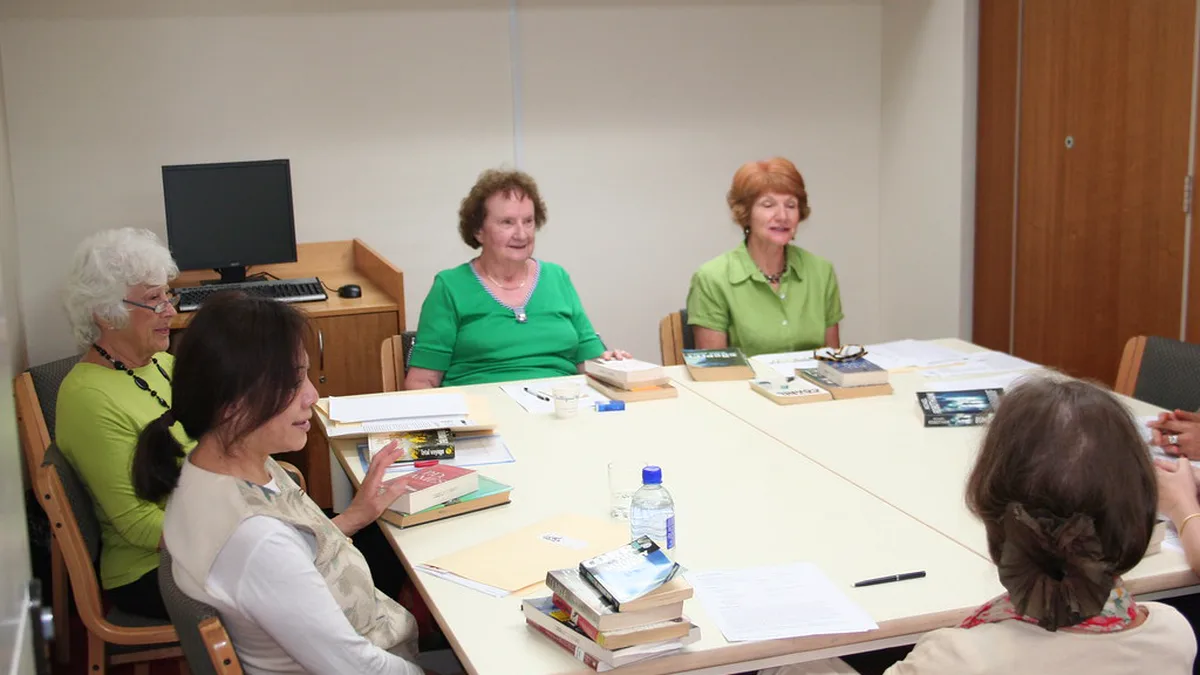
This guide is for whoever’s turn it is to lead next month, and for any club that drifts to the snack table by minute twenty. You don’t need a reading guide or a literature degree, just a few good questions and a sensible order.
Below are 40 questions grouped by stage, genre swaps, follow-ups for quiet moments, and ways to include people who didn’t finish. Every guide on running a group lives in our book club section.
Your 90-minute meeting, question by question
- Minutes 0 to 10: Go around once: one word or a score out of ten, no explaining yet.
- Minutes 10 to 25: First impressions: what pulled people in, and one moment that stuck.
- Minutes 25 to 50: Your main interpretive question, the one you honestly can’t settle. Let follow-ups carry it.
- Minutes 50 to 70: Two or three questions from whichever stage the talk already leans toward.
- Minutes 70 to 85: The ending and the bigger questions: was it fair, did it ring true, did it change anyone’s mind?
- Minutes 85 to 90: Who would you recommend it to? Then choose the next book while everyone’s still in the room.
What makes a good book club question?
A good book club question has at least two reasonable answers that someone could defend with a page from the book. That test comes from the Great Books Foundation, which calls these interpretive questions. If a question has one right answer, the talk stops. If it has nothing to do with the text, the talk drifts.
The foundation’s introduction for discussion leaders and participants sorts questions into three kinds. Knowing which kind you’re holding tells you where it belongs in the evening.
| Type | What it asks | Public-domain example | Where it fits |
|---|---|---|---|
| Factual | Something with one correct answer in the text | In Frankenstein, which university town does Victor leave home for? | Only mid-talk, to settle a disputed detail |
| Interpretive | What something means, with more than one answer you can support from the book | In Pride and Prejudice, why does Elizabeth believe Wickham’s story so quickly? | Your opening question, and most of the hour |
| Evaluative | Whether the book is right, judged against your own life and values | Is Victor responsible for everything his creature does? | Near the end, once the book itself has been explored |
The same guide also warns against questions that would fit almost any book with minor changes; its example of one that’s too vague is “What is the theme of Antigone?” So treat any list, this one included, as a starting point. The best question of the night is usually the one you scribbled in the margin, and a simple annotation key makes those margin questions easy to find again.
Small rule: open with a question you genuinely don’t know the answer to.
40 book club questions for any book, by stage
Use these book club questions as a menu, not a script. Pick one or two per stage and rewrite them with a name, scene or page from your book.
First impressions
- What did you expect from this book before page one, and how close did it come?
- Which page made you decide to keep going, or nearly stop?
- If you had to describe the book to a friend in one sentence, what would you say?
- Where did the pace change for you?
- What’s one moment you keep coming back to, and why that one?
- Did your feelings shift between the first half and the second?
Characters
- Whose choices did you understand even when you didn’t agree with them?
- Which character changes the most, and what pushes them to change?
- Who did you trust at the start but not by the end, or the other way round?
- Is there a minor character who deserved more pages?
- What does one character want that they never say out loud?
- If someone else in the story told it, what would we learn?
- Which character would you least like to share a long train ride with?
Structure and style
- Why do you think the book starts where it does, and not earlier or later?
- Read the opening line aloud. What does it promise, and does the book deliver?
- How does the narrator’s voice shape what you believe?
- Was there a scene that felt rushed, or one that went on too long?
- Does the title mean something different now that you’ve finished?
- Which passage best shows how this writer writes?
- If you cut one chapter, what would be lost?
Themes and ideas
- What question is the book asking, even if it never answers it?
- Where does the setting do more than sit in the background?
- Which objects or repeated images carry extra weight?
- What does the book say about who gets to make choices and who doesn’t?
- Did anything in it change how you see someone in your own life?
- Which of your beliefs did the book push against, if any?
- What does this book understand about people that other books get wrong?
The ending
- Did the ending feel earned, or did it feel arranged?
- Where do you imagine the main characters a year later?
- Which question did the book leave open, and why?
- If you could redo the last chapter, what would change?
- Read the closing line aloud. Why do you think the writer stopped there?
- Does the ending change how you feel about the first chapter?
Would you recommend it?
- Who is this book for, and who should skip it?
- Out of ten, where would you put it now? Has tonight moved your number?
- Will you remember this book in a year? Which part?
- Which other book would you pair it with for a double feature?
- Would you pick up another book by this writer?
- What would you tell the writer if you had five minutes with them?
- Based on what worked here, what should the club read next?
Small rule: circle three questions before the meeting and treat the rest as backups.
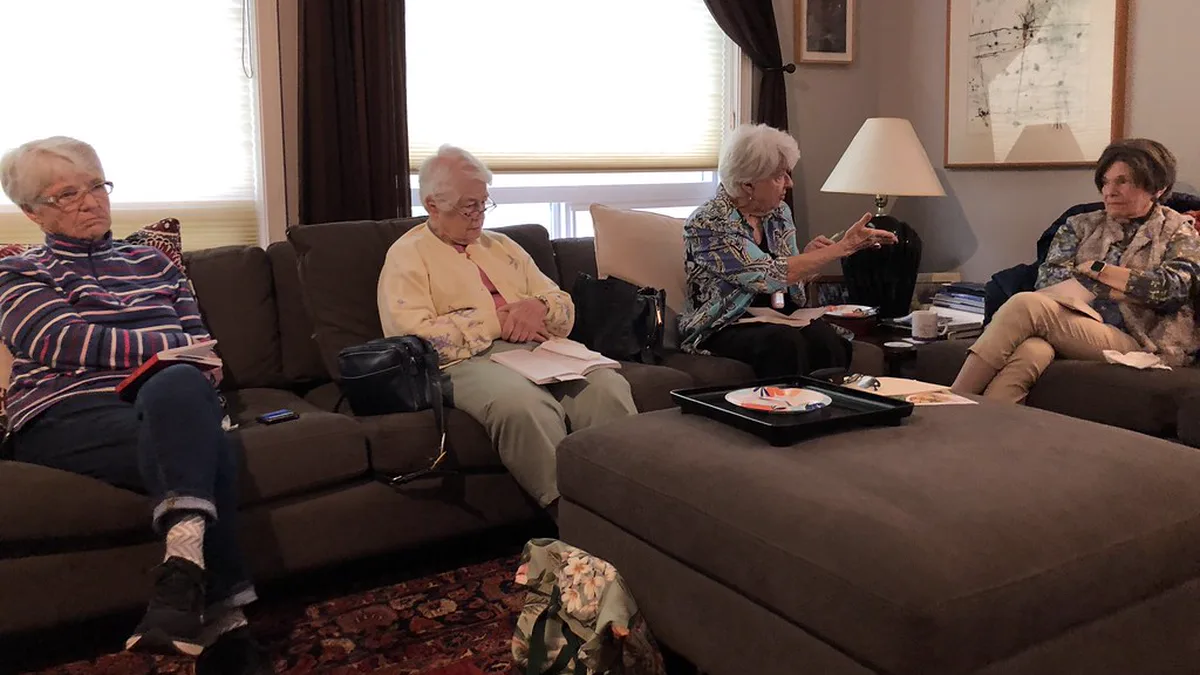
Which book club discussion questions fit fiction, nonfiction and memoir?
Most book club discussion questions work for any novel, but nonfiction and memoir need a few swaps. With nonfiction, ask whether the argument held up and what shifted in your thinking. With memoir, ask about memory, honesty and what the writer left out.
| Book type | Swap in questions about | Try asking |
|---|---|---|
| Novel | Choices and consequences | What would have happened if the main character had said no at the turning point? |
| Nonfiction | Evidence and argument | Which claim convinced you, and which one needed more proof? |
| Memoir | Memory and honesty | Where did you sense the writer protecting someone, maybe themselves? |
| Classic | Then versus now | What would a reader in 1813 have noticed in Pride and Prejudice that we miss today? |
Public-domain classics like Frankenstein or Little Women are easy to borrow, and nobody frets about spoilers, so you can start with the ending if that’s the interesting part.
Small rule: for nonfiction, bring one question about the author’s evidence and one about your own life.
How many book club questions should you bring?
Bring about ten book club questions for a 60 to 90 minute meeting, and expect to use five or six. One strong interpretive question can carry half an hour by itself. The extras are backups for when a topic runs dry, not a list you have to finish before anyone can go home.
For a benchmark, the Great Books Foundation’s starter kit for new discussion groups sets aside 30 to 45 minutes for the discussion itself at a first meeting. Facing History’s book club guide makes the same point from another angle: choose a few questions and spend real time on them instead of racing through many.
It shows in real clubs. In a r/literature thread about book club frustrations, one reader compared two groups. In one, the leader read the questions printed at the back of the book and talk wandered off-topic. In the other, that month’s leader emailed questions a couple of days ahead, and the reader called those discussions always engaging.
A sheet that works:
- One warm-up anyone can answer in a sentence.
- One opening interpretive question you truly can’t settle.
- Six or seven from the stages above, rewritten for this book.
- One evaluative question for the last stretch.
- One “what next?” question to close.
Small rule: if a question gets a “yes” and then silence, cross it off and ask “why?” instead.
What do you ask when the room goes quiet?
When the room goes quiet, wait a few seconds longer than feels comfortable, then ask a follow-up instead of a new question: “What makes you think so?” or “Which page gave you that feeling?” Silence usually means people are thinking. Jumping to a fresh topic tells them their thinking wasn’t needed.
There’s classroom research behind the pause. Faculty Focus, in a summary of classroom research on wait time by education researcher Mary Budd Rowe, reports that teachers typically wait between 0.7 and 1.5 seconds after asking a question, and that waiting 3 seconds or more led to better student answers. A book club isn’t a classroom, so treat that as a rough guide, but most of us rescue the silence far too soon.
Follow-ups adapted from the Great Books guide:
- To clarify: “Can you say a bit more about that?”
- To find the page: “What part of the book makes you think that?”
- To bring others in: “Does anyone who hasn’t spoken yet see it differently?”
Quiet isn’t always bored. Under a video on how to talk about books, one of the top comments came from a viewer who described themselves as very introverted and said the first meeting of their new club was making them nervous. A quick go-around, one word each about a character, helps people like that.
Small rule: count to five in your head before you fill a silence.
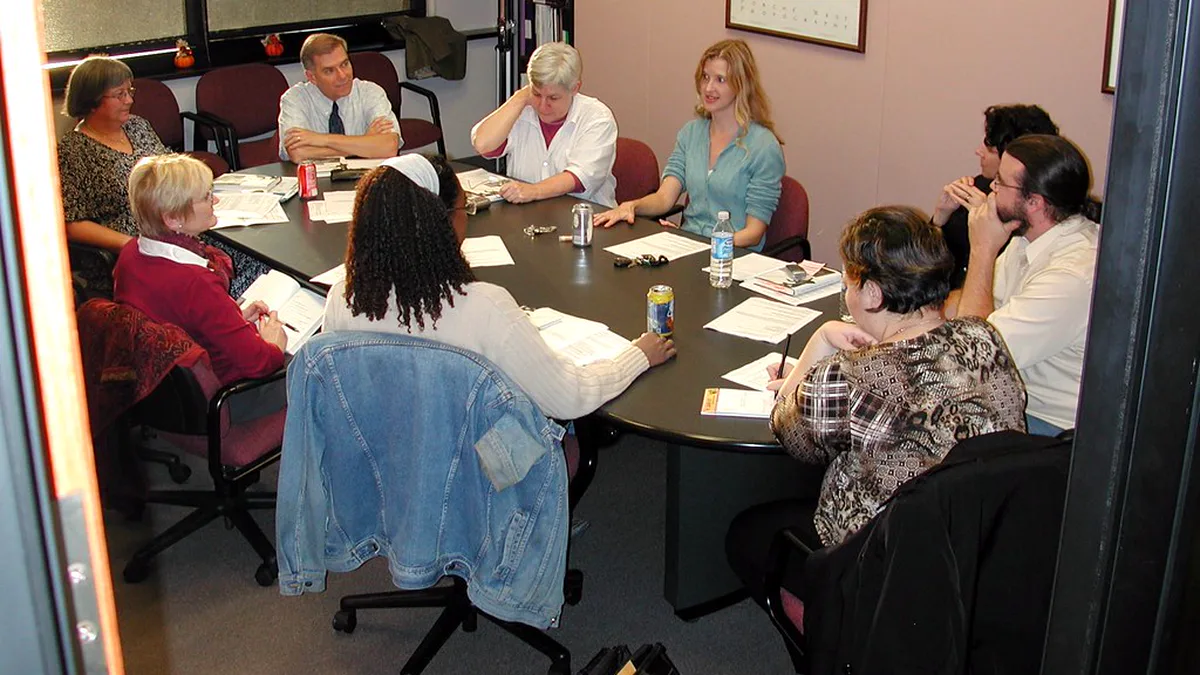
What can you ask members who didn’t finish the book?
Ask questions that run on experience rather than plot: where they stopped and why, what they expected to happen next, and which character they’d keep reading for. Agree on a spoiler line at the start, so anyone who stopped at chapter ten knows when to step out or stay for the ending.
Questions partial readers can answer:
- Where did you stop, and what made it easy to stop there?
- What did you think would happen next?
- Which character would you keep reading for?
- Does hearing the ending tonight make you want to finish, or confirm your choice?
BookBrowse’s editors also suggest a general topic linked to the book that doesn’t need detailed knowledge of it, for groups that don’t insist on finishing.
Audiobook listeners usually have finished. The r/literature thread began with a member who felt like the only one reading on paper, but the top reply, with 155 points, said its clubs had about an even split of listeners and readers and not much link between format and the quality of what people contributed. Judge the comment, not the format.
If the same person never finishes, it may be the habit. A gentle plan for getting back into reading starts smaller than most people think.
Small rule: nobody apologizes for not finishing. They just say where they stopped.
How do you make book club questions fun?
Turn a few questions into categories or small games: best supporting character, most memorable scene, a line you’d put on a mug, awards like a school yearbook. Games land best after the serious questions, and they’re a gentle way in for members who freeze at “what did the author mean?”
In a r/books thread asking for fun discussion questions, the original poster’s group borrowed categories from a movie podcast, like most memorable scene, best quote and nitpicks. Replies added yearbook-style awards, a ranking game called “Reread, Rewrite, Burn”, and a soundtrack question.
A few formats to rotate:
- Category round: each person names a winner in one category and defends it in a minute.
- Yearbook awards: most likely to ruin a dinner party, quietest hero, best excuse.
- Soundtrack: one song per character, with a reason.
Small rule: one game per meeting.
Book club question myths, and what actually helps
Some advice about book club questions makes leading harder than it needs to be.
| Myth | What actually helps |
|---|---|
| You need the publisher’s reading guide. | Write your own. BookBrowse’s editors suggest building one from all-purpose questions when a book has no guide. |
| More questions make a better meeting. | Fewer, deeper ones. The Great Books starter kit gives a first discussion 30 to 45 minutes, and one good interpretive question can fill most of it. |
| Silence means the question failed. | In Rowe’s classroom research, as summarized by Faculty Focus, waiting 3 seconds or more improved answers. Count to five before you rescue it. |
| Listeners didn’t really read the book. | In the r/literature thread, a club with an even split of listeners and readers saw little link between format and contribution. |
None of this needs a degree. It needs a sheet of ten questions, a little patience and a host who’s curious too. So which question are you bringing to the next meeting?
Between chapters
Should you send book club questions ahead of time?
Send two or three a couple of days early. It helps people notice pages while they finish and gives quieter members time to think. Keep the rest for the night so the talk still has surprises.
Where do you find questions for a specific book?
Many paperbacks print a reader’s guide at the back, and publishers often post one on the book’s page. Use it as a starting point, then add a question from your own margin notes, because printed guides are written for every club at once.
How do you handle spoilers when not everyone finished?
Set a spoiler line when the meeting starts. Talk up to a named chapter first, then announce the switch to the ending, so anyone who still plans to finish can step out for a refill and come back.
Who should lead the questions each month?
Rotate it. A new leader each month brings different questions and spreads the work. Hand a first-timer this list and the run order, and they’ll be fine.
Can you reuse the same questions every month?
Yes, for the warm-up and the closer, which give the meeting a shape. Swap the middle questions every time, since those should come from the book you just read.
How we researched this: No publisher paid for placement. The draft was machine-assisted; titles, dates and formats were re-checked by the writer against library catalogs.
Sources: Great Books Foundation, guide for discussion leaders; Great Books starter kit; Faculty Focus; BookBrowse (2024); Facing History (2024); r/literature, r/books.
Leave a Reply
You must be logged in to post a comment.