Bookmark this: A DNF book is one you started and chose not to finish. It’s common: in a 2022 YouGov poll only 33% of those asked said they always finish books they start. Give a book a fair test, pause it if the timing is wrong, quit it if you dread it, then start the next one.

This one’s for you if a bookmark has sat at page 80 for three weeks and starting something else feels like cheating.
It isn’t cheating. Putting a book down is one of the most normal things readers do, and the numbers back that up. Below: what the surveys found, why readers quit, a keep going, pause or DNF table, and how to let a book go without the guilt.
From doubt to decision, one book at a time
- First sitting: Read without judging. Openings are often the slowest part.
- Around 10% in: Ask one question. Do you look forward to picking it up, or do you reach for your phone instead?
- Name the problem: Is it the book, or your week? Stress can make a good book feel like a chore.
- Pause test: Leave the bookmark where it is, shelve it for a week and read something short in between.
- Decide: Go back to it if you missed it. If you felt relief, mark it DNF and write one line about why.
- Next book within a day: Start something else so the habit doesn’t stall.
What does DNF mean for a book?
DNF stands for “did not finish.” A DNF book is one you started and then decided to stop reading on purpose, not one you forgot about halfway through. Readers use it as a verb too (“I DNF’d it at page 60”), and most reading trackers have a shelf for it.
That word “decided” matters. A book you drifted away from is just unread. A DNF is a choice, ideally with a reason attached, which makes it useful later when you’re picking what to read next.
Small rule: if you’ve decided, call it a DNF out loud. Naming it is what lets you move on.
How many readers DNF books?
Most of them, at least some of the time. In a 2022 YouGov poll of 1,000 US adults, only 33% of those asked said they always finish a book once they start it, and a 2013 Goodreads survey found 38.1% saying the same. Put the other way round, roughly six or seven in ten readers quit books sometimes, and younger readers quit most often.
| Source | Who was asked | What it found |
|---|---|---|
| Goodreads infographic, July 2013 | Goodreads members (the number who answered isn’t published) | 38.1% always finish; 27.9% quit between 50 and 100 pages; 15.8% quit before page 50 |
| Goodreads poll “When do you abandon a book?”, opened June 2013 | 21,209 votes when we checked in October 2026 | 38.4% always finish; 27.8% quit between 50 and 100 pages; 15.7% before page 50 |
| YouGov, July 2022 | 1,000 US adult citizens | 33% always finish, 1% never do; about 40% of readers 45 and older always finish, against 22% of those under 30 |
| WordsRated survey, reported by Book Riot, June 2022 | 2,003 US adults | 48% finished a whole book in the past year; starting without finishing was more common than not reading at all |
| Hawking Index, 2014 | Kindle popular highlights, not people | A Brief History of Time scored 6.6%, The Goldfinch 98.5% |
Each survey asked a slightly different question, but they point the same way. Goodreads published its member answers as an infographic in the July 2013 blog post What Makes You Put Down a Book?, where 38.1% always finish, no matter what and the most popular quitting zone is 50 to 100 pages.
The matching Goodreads poll on when readers abandon a book is still open and has barely moved: 38.4% of 21,209 votes say they always finish. Anyone can vote, so treat it as a temperature check.
The most careful number is YouGov’s. In a poll run July 19 to 22, 2022, reported in YouGov’s write-up on reading then and now, 33% of US adults said they always finish books once they start and 1% said they never do. Age mattered: around 40% of readers 45 and up always finish, against 26% of 30 to 44 year olds and 22% of adults under 30.
Book Riot’s Kelly Jensen covered a different angle in her June 2022 piece on how many adults finished a book last year, drawing on a WordsRated survey of 2,003 adults: only 48% had finished a whole book in the past year, and starting without finishing was more common than not reading at all.
Then there’s the Hawking Index, which mathematician Jordan Ellenberg came up with in a 2014 Wall Street Journal blog post. As this encyclopedia summary of Ellenberg’s highlight method explains, it used where Kindle readers’ popular highlights sat as a rough guess at how far people got. A Brief History of Time scored 6.6%; The Goldfinch scored 98.5%. It’s a playful estimate, but even famous books get put down early.
Small rule: if roughly two out of three readers quit sometimes, a DNF doesn’t make you the odd one out.
Why do readers quit a book?
Mostly because it’s slow. In the Goodreads 2013 infographic, 46.4% of answers to “what makes you put it down?” were “slow, boring,” far ahead of weak writing at 18.8%. Everything else was in single digits, from an unlikable main character to bad editing, which tells you pace matters more than almost anything.
The full list from that infographic:
- Slow, boring: 46.4%
- Weak writing: 18.8%
- “Extremely stupid”: 8.8%
- Ridiculous or nonexistent plot: 8.5%
- Didn’t like the main character: 4.9%
- Inappropriate, made them uncomfortable: 3.8%
- The author committed to something they hate: 3.2%
- Bad editing: 2.7%
Real readers get pickier than any survey category. In an r/books thread asking for the pettiest reason you’ve DNF’d a book, people listed a foreword spelled “forward” and one word repeated every few pages. Small irritations add up when nothing else pulls you forward.
Small rule: when you DNF, name the reason in a word or two. Over a year those words show you what your reading life really wants.
When should you DNF a book?
When you’ve given it a fair test and still dread picking it up. There’s no correct page, so set a checkpoint you can live with. In the Goodreads poll the biggest group, 27.8% of votes, quit somewhere between 50 and 100 pages, while 15.7% decide before page 50. Both are reasonable.
If you like a rule with a name, librarian Nancy Pearl’s Rule of 50 is the classic one, and we’ve already walked through it in our guide on how to get back into reading.
Percentages work better for ebooks and long novels. In a widely upvoted r/books thread about dragging yourself through a book you’re not hooked on, the top reply said a book now gets 10% of its pages to catch their interest. Another gives 10 to 20%, and said most books they quit never tempted them back.
Whatever checkpoint you choose, these signs usually mean it’s time:
- You’ve started avoiding reading altogether because this book is “next.”
- You skim whole pages and can’t say what happened.
- You’re reading only so you can count it as finished.
- The content is upsetting you in a way you didn’t sign up for.
Small rule: decide your checkpoint before you start the book, not while you’re annoyed with it.
Should you finish books you don’t like?
Usually, no. Unless you need it for a class, for work or for a book club meeting you care about, finishing a book out of guilt mostly costs you reading time and can stall the habit for weeks. The exception is a book that’s hard rather than bad, and a short pause will usually tell you which kind you’re holding.
It helps to know why people push on. The same Goodreads infographic asked “what keeps you turning pages?” The top answers were “as a rule, I like to finish things” at 36.6%, “I have to know what happens” at 25.2%, and “it’s a compulsive habit” at 13.4%. Only 2.3% said they’re usually pleasantly surprised that an author pulls it out in the end.
Wanting to finish things beat expecting the book to improve by a wide margin. That’s the guilt talking, not the story.
There’s a fair counterargument, and Book Riot’s Matt Grant made it in a 2018 essay on whether it’s okay to stop reading a book you don’t like. His point: reading doesn’t always have to be fun, hard books can stretch you, and it’s worth separating “badly written” from “not my taste” before you quit. That’s a good test for slow-starting classics.

Still, the time argument wins for most of us. In that pettiest-reason thread, a self-described perfectionist changed their mind after their wife said: “You’re never going to be able to read everything you want in this lifetime if you waste time on the books you don’t.” The reader who started the thread about dragging through a book posted an update too: they DNF’d it, and the guilt went with it.
Small rule: if you’re only finishing it to say you finished it, you already know the answer.
Keep going, pause or DNF: a quick decision table
Most stuck books fall into one of three piles. Match what you notice to a row and act on it the same day.
| What you notice | Verdict | What to do |
|---|---|---|
| Slow start, but you’re curious about one character or question | Keep going | Read to your checkpoint, in short sittings |
| You need it for a class, job or club meeting | Keep going | Skim the slow stretches and read the key chapters closely |
| Good book, wrong week: stress, mood or no time | Pause | Leave the bookmark in, shelve it and set a date to try again |
| You liked it, but you’re craving a different genre | Pause | Read one short book you’re excited about, then come back |
| You’ve passed your checkpoint and dread every sitting | DNF | Stop today and write one line about why |
| Content is hurting more than it’s helping | DNF | Stop right away; you don’t owe it a checkpoint |
| You feel relief at the thought of quitting | DNF | Trust that, return it and start something else |
People forget the pause. One reader quoted in the Goodreads infographic set books aside with the marker in place and picked them up years later. A pause can be long.
Small rule: give a paused book one return date. If you don’t miss it by then, it becomes a DNF.
How do you DNF a book without feeling guilty?
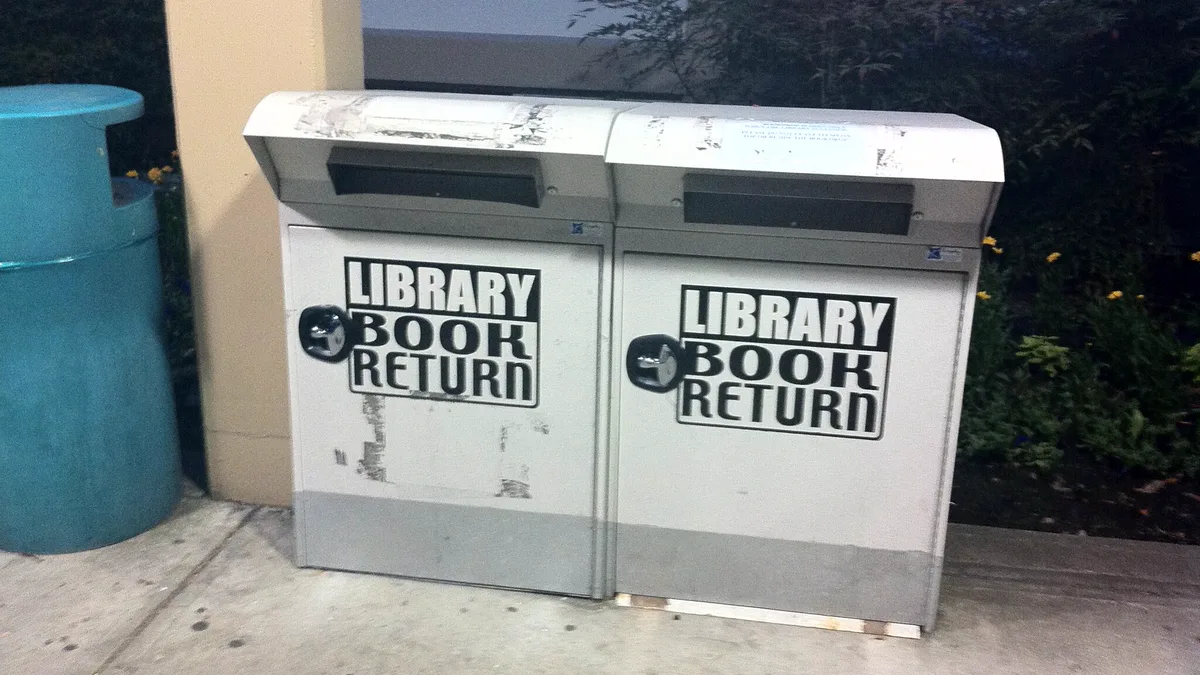
Make it small and practical. Return or pass the book on, write one line about why you stopped, note the page, and start your next book within a day. Guilt sticks around when a half-read book stays on your nightstand, so most of the fix is getting it out of sight.
A few habits that make letting go easier:
- Library books: just take them back. As Book Riot’s Sarah S. Davis put it in a 2017 piece on library myths, “borrowing a book is not a binding contract that you must read and finish it.”
- Books you own: pass them to a friend, a book swap shelf or a donation box.
- A one-line note: title, page or percentage, and a few words on why. “Too slow for this month” is a perfectly good note.
- Your list: move it off your to-be-read list or onto a “maybe later” line, so it stops nagging you.
- Your goals: if quitting knocks a prompt off your year, swap in one of these reading challenge ideas.
Treat each DNF as information. If your notes keep saying “slow first act,” read samples before you borrow. If they say “wrong mood,” keep a comfort read nearby. There’s more on building the habit in our reading habits section.
Small rule: the next book starts before the guilt does.
DNF book myths, and what actually helps
| Myth | What actually helps |
|---|---|
| Quitting a book means you’re not a real reader. | Only a third of the people YouGov asked in 2022 said they always finish. Most readers stop sometimes, and they keep reading. |
| You can’t return a library book you didn’t finish. | You can, any time before the due date. Borrowing isn’t a promise to finish. |
| If everyone loves it, pushing on will win you over. | The Hawking Index suggests many celebrated books are put down early. Taste is allowed to differ. |
| A DNF is forever. | A pause is a valid choice, and some readers pick a shelved book up years later. |
| You can’t talk about a book you didn’t finish. | You can. Just say where you stopped and why. |
None of this means quitting every book that wobbles. The decision is yours. So which bookmark has been stuck in the same place the longest?
Between chapters
Does a DNF count toward your reading goal?
That’s up to you, since it’s your goal. Some readers count a book once they pass the halfway mark, others only count finished ones. Pick one rule at the start of the year and keep it.
Should you rate or review a book you didn’t finish?
If you share a review, say clearly where you stopped and why. A note like “quit at 30%, the pace didn’t work for me” is honest and still useful to other readers. Skip a star rating if you feel you didn’t see enough of it.
Is it rude to stop reading a book a friend recommended?
No. Tell them kindly what didn’t click, and what you did like. Most friends would rather hear that than watch you push through.
Can you quit a book club pick?
Yes. Go to the meeting anyway, say where you stopped and why. Readers who didn’t finish often add a useful view, and spoilers won’t hurt a book you’ve already set aside.
How far into a book counts as a DNF?
Any distance, if you decided to stop. Some readers only use the label after page 50 or 10% in, and call anything earlier “not for me.” There’s no official cutoff, so use whatever makes your notes useful.
How we researched this: No publisher paid for placement. The draft was machine-assisted; titles, dates and formats were re-checked by the writer against library catalogs.
Sources: Goodreads blog, “What Makes You Put Down a Book?” (July 2013) and Goodreads poll “When do you abandon a book?” (checked October 2026); YouGov, “What kinds of books did Americans read growing up, and what do they read now?” (July 2022); Book Riot, Kelly Jensen, American reading habits (June 2022, WordsRated survey); Wikipedia, Hawking Index; Book Riot, Matt Grant (2018) and Sarah S. Davis (2017); r/books threads on quitting books.
Leave a Reply
You must be logged in to post a comment.