Bookmark this: A TBR list is your “to be read” list: the books you plan to read soon, not every title you’ve saved. Keep it short enough to finish in about a year at your usual pace, park the rest on a someday list, and choose your next book by mood, time and what’s waiting at the library.
This one’s for you if your list started as a handful of titles and somehow became a second job. Maybe opening it makes you feel behind before you’ve read a page.
You’re not behind. A TBR list is a tool, and most of us were never shown how to keep one small. Below you’ll find what belongs on it, four ways to hold it, a pruning rule you can use in five minutes, and a simple way to choose what to read next when every option looks good.
A one-weekend TBR reset
- Friday evening: Gather every list into one place: app shelves, screenshots, notes, the nightstand pile.
- Saturday morning: Work out your pace. Count the books you finished last year, or take the last three months and multiply by four.
- Saturday afternoon: Sort every title into three groups: reading soon, someday, and not anymore.
- Sunday: Trim “reading soon” to about one year at your pace. Everything else moves to a someday list you’re allowed to ignore.
- Sunday evening: Place two or three library holds from the short list, then pick tonight’s book.
- Once a month after that: A five-minute check: cut one cold title, promote one from someday.
What is a TBR list?
A TBR list is a running list of books you mean to read; the letters stand for “to be read.” It can live in a notebook, an app, your library account or a stack on the nightstand. The useful version holds only books you’d happily start in the next few months, not every recommendation you’ve ever saved.
If your list has outgrown your life, you’re in very old company. Japanese has a word for books that pile up unread: tsundoku. The Wikipedia entry on tsundoku traces it to slang from the Meiji era (1868 to 1912), a blend of a phrase for piling things up and leaving them with the word for reading books. It isn’t a character flaw.
Readers describe their lists in very different ways. In a r/books thread about a reading list that grew bigger than intended, one commenter with more than 1,000 saved titles said it means they’re never left wondering what to read next. Another called theirs a “might read” list. Trouble starts when a “might read” list gets treated like a to-do list.
So it helps to split one list into two:
- The TBR list: books you could start next, that you can get your hands on, and that still make you a little curious when you read the title.
- The someday list: everything else. Recommendations, award lists, that classic you feel you ought to read. No deadline, no guilt, no counting.
Small rule: if a book can’t start next month, it lives on someday.
How long should a TBR list be?
Short enough that you could finish it in about a year at your normal pace. If you read 20 books a year, aim for around 20 titles. Past that, the list becomes a catalog for browsing, not a plan.
The quickest way to see where you stand is a little arithmetic you can call years-to-clear: divide the number of books on your list by the number you finish in a year. The r/books poster in that same thread said their list had reached around 370 books while they read about 40 to 50 a year. That’s roughly seven to nine years of reading before they’d reach the bottom, and that’s if they never added another title.
| Books on your list | You read 12 a year | You read 25 a year | You read 50 a year |
|---|---|---|---|
| 25 | About 2 years | About 1 year | About 6 months |
| 100 | About 8 years | 4 years | 2 years |
| 300 | 25 years | 12 years | 6 years |
Nobody finishes a 25-year list, so the list was never a debt. To use the math:
- Write down your list length and your yearly pace.
- Divide. Anything over two years means your TBR list is doing a someday list’s job.
- Keep roughly one year’s worth in the active list and move the rest without deleting it.
Small rule: your pace sets the size of the list, not your ambition.
TBR list systems compared: notebook, app, library holds and jar
The best system is the one you’ll actually open. Paper is calm and private, apps are searchable, library holds move on their own, and a jar takes the decision out of your hands. Many readers mix two, such as an app for capturing titles and a paper list for the short active shelf.
| System | Works best for | Watch out for | Upkeep |
|---|---|---|---|
| Paper notebook | Short active lists, readers who like crossing things off | Hard to search or re-sort once it grows | Rewrite the list every few months |
| Reading app or spreadsheet | Capturing titles fast, sorting by length or genre | Easy to add, so the list balloons | Monthly prune |
| Library holds and tags | Pacing your reading, borrowing free | Only covers what your library carries | Keep a few holds active |
| TBR jar | Indecisive moments, monthly picks | Slips go stale if you never refresh them | Swap slips each season |
| One shelf of unread books | Print readers who own a lot of unread books | Space, and the urge to buy more | Read from it before buying |
In a r/books thread on keeping track of a long reading list, one person liked StoryGraph for mood-based suggestions and its short “next up” queue. Another tags books in the Libby library app by genre or mood and checks those tags when they have no idea what to read next, though a reply pointed out that tags only help if your library has the book. A spreadsheet fan sorts by “what I don’t own and the library doesn’t have” before buying anything, then sorts by genre or page length at home. Goodreads shelves came up a lot too.
The jar is the simplest of the lot. Write each title from your active list on a slip of paper, fold it, and draw one when you can’t decide. It ends the scrolling. Only put in books you’d be glad to read, or you’ll keep throwing slips back.
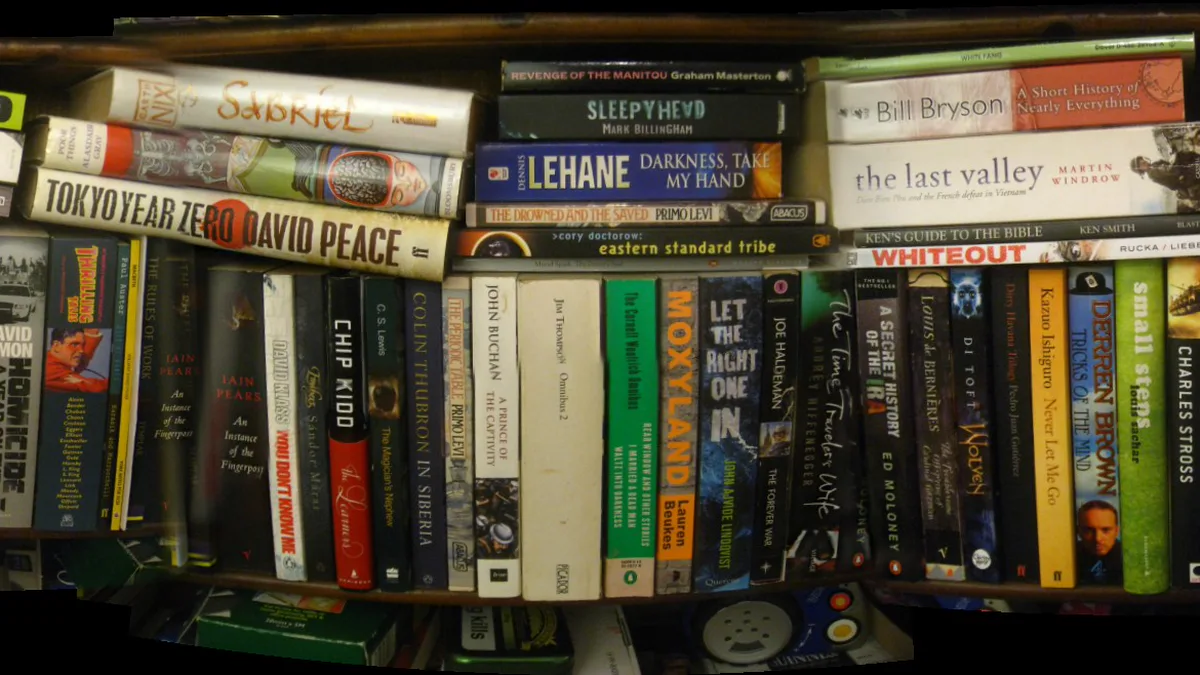
If most of your list already sits on your shelves, give it one home. The Flickr user behind the photo at the top of this page put every unread book on one shelf, hoping it would cure the urge to buy more.

Small rule: one place to capture, one place to choose from.
How do library holds work as a TBR list?
Place holds on the books you most want, and the queue paces your reading for you. When a hold arrives in Libby, you get 72 hours to borrow, suspend or cancel it, and suspending keeps your place on the wait list. That turns a pile of wishes into a slow, free delivery of books you chose.
Those details come from Libby’s own help page on acting on an available hold. Print hold pickup windows vary by library, so check yours. The point is that a hold list is a TBR list with a built-in rhythm.
In the r/books thread on an oversized TBR list, one commenter said they keep about 70 books on their list, always have at least five library holds going, and stop a book at around 25% if they’re not loving it. In a r/books thread from a reader who stopped buying books for six months, another said borrowing from the library got them through their pile because the time limit helps motivation.
To set it up:
- Pick three to five titles from your active list and place holds now.
- Suspend instead of panicking when two arrive at once. You keep your place.
- Refill a hold every time you return a book, so the next one is already on its way.

Small rule: always have the next book in the queue, never the next ten.
When should you cut a book from your TBR list?
Cut it when you read the title and feel nothing, or when you can’t remember why you added it. A quick test: if this book were free and in your hands right now, would you start it this month? If the answer is no, it moves to someday or leaves the list. Pruning is editing, not failure.
Here’s a pruning rule that fits into a monthly five-minute check:
- The cold-title test. Read each title out loud. No spark, no stay.
- The why test. Can’t remember why you added it? Let it go.
- The duty test. If you only want to have read it, not to read it, it belongs on someday.
- The three-for-one rule. One reader in the no-buying thread said they must finish three books before buying a new one, keep their wish list ordered by how much they want each title, and now read more than twice as much as before.
Books you’ve already started need their own rule. Librarian Nancy Pearl’s Rule of 50, as reported by Shelf Awareness in 2011, says to give a book 50 pages and then ask if you’re really liking it. If you’re 51 or older, subtract your age from 100 to get your page count. Some readers go stricter: the original poster in the no-buying thread gave any book five pages to hook them again once they started skimming. A commenter replied that a rule that strict would give them anxiety, because some of their favorite books started slow.
Pick the rule that feels kind to you, not the one that sounds disciplined. If quitting books has left you in a slump, our guide on how to get back into reading has a gentle restart.
Small rule: deleting a title from the list never deletes it from the world.
How to choose what to read next
Start with your mood and your week, not the order of the list. Ask how much time and energy you have, then pick the book on your list that fits: short and fast for a busy week, long and immersive for a quiet one. Librarians call these qualities appeal factors, and they’re the quickest way to narrow a long list.
The idea comes from readers’ advisory, the library service of suggesting books to readers. According to Wikipedia’s readers’ advisory entry, almost all North American public libraries offer some form of it, and it weighs things like pace, tone, characterization, setting and writing style alongside genre. Or simply ask at the desk. “Something fast and warm, like the last book I loved” is exactly the question it exists for.
| If your week looks like this | Reach for |
|---|---|
| Tired, busy, ten minutes at a time | Short chapters, fast pace, a story you can drop and pick up |
| A quiet weekend ahead | The long one you’ve been saving, with room to sink in |
| Low mood or stress | A comfort reread or a gentle, warm tone |
| Restless and bored with your usual shelf | The book on your list least like your last one |
| A hold arriving in two days | Something short to finish before it lands |
Going off the list is allowed, too. In a r/books thread on following your list or venturing into the unknown, one reader with less free time than before said choosing from a curated list leaves them with far more four and five star reads. Another described their list as a pre-screened pool of options they’ll never finish, and a third said they’ve never stuck with a TBR in their life.
If you want to learn your own appeal factors, jot a line after each book about how it felt, not just whether you liked it. Our reading journal ideas include a few prompts that make this quick.
Small rule: choose for the week you’re actually having.
TBR list myths, and what actually helps
A few beliefs keep readers stuck.
| Myth | What actually helps |
|---|---|
| A long TBR list means you’re failing as a reader. | Do the years-to-clear math. A list longer than your lifetime of reading was never a plan, so move most of it to someday. |
| You have to read your list in order. | Order by appeal, not by the date you added a title. Mood, pace and time are better guides. |
| Removing a book is a waste of the money you spent on it. | Money spent stays spent either way. Pass it on, donate it, or keep it on the shelf without the guilt label. |
| The right app will finally fix the list. | Apps make adding easier, which can make the list longer. A monthly prune fixes more than any tool. |
Find more ways to make the habit stick on our shelf of guides on building the habit.
So, which title on your list are you finally letting go of, and which one are you starting tonight?
Between chapters
What’s the difference between a TBR list and a wishlist?
A TBR list holds books you plan to read soon and can get hold of. A wishlist holds books you’d like to own or might read one day. Keeping them apart stops shopping ideas from crowding your reading plan.
Should books you already own go on your TBR list?
Yes, and they deserve a head start, since they’re ready the moment you are. Put two or three of them on the active list each month, alongside a library hold or two.
Do rereads count on a TBR list?
They can. If you’re craving a favorite again, add it to the active list like any other book. A comfort reread is often the fastest way out of a stuck patch.
Is a TBR jar worth trying?
It’s worth a month. Fill it only with books from your active list, draw one slip when you can’t decide, and allow one redraw. If you keep redrawing, the slips need pruning, not the jar.
What if looking at your TBR list makes you anxious?
Hide the long version. Keep a short list of five to ten books you can see, and move everything else to a someday list you only open when you want ideas.
How we researched this: Book details (publication dates, series order, formats) are checked against the publisher and library catalogs. AI helped with an early draft; the writer rewrote it and checked every title.
Sources: Libby help, acting on an available hold; Shelf Awareness, Nancy Pearl’s Rule of 50 (2011); Wikipedia entries on tsundoku and readers’ advisory; r/books threads on oversized TBR lists, tracking a long TBR, a six-month book-buying break, and following a TBR list.
Leave a Reply
You must be logged in to post a comment.